Drain Slow Again a Week After You Snaked It? Why the Clog Comes Back
You had the drain snaked. Water moved again. And then, a week or two later, that same sink or tub started backing up in the exact same spot. If that pattern feels familiar, the problem was never fully solved the first time around.
Quick Answer:
A drain snake clears a path through a clog, but it usually doesn't clean the pipe. The cable bores a hole through whatever is blocking the line, and the grease, soap film, hair mat, or mineral scale coating the pipe walls stays right where it was. Within a week or two, fresh debris catches on that leftover coating and the drain slows down again. A drain that keeps re-clogging on the same schedule almost always needs a full interior cleaning, not another round of snaking.
What a Drain Snake Actually Does (and Doesn't Do)
A cable machine is built to punch through an obstruction, not to scrub a pipe clean. The spinning head either grabs onto debris and pulls it back, or it bores a channel straight through the softer material sitting in the line. Either way, water starts moving again, which feels like the problem is fixed.
The Catch Is What's Left Behind
If the clog was built from layers of grease, soap scum, or mineral buildup coating the pipe wall, the snake only opens a narrow channel through the center of it. The lining is still there, just with a hole punched through it. Think of it the way water carves a channel through packed snow or river silt: the passage opens, but the material on either side of that channel hasn't gone anywhere.
Why This Shows Up Fast
In the first day or two after snaking, that channel is wide enough to handle normal flow. As you keep using the fixture, hair, food particles, and soap residue catch on the rough, coated walls of that channel and narrow it back down. By the second week, you're back to a slow drain, sometimes in the same fixture, sometimes one nearby that shares the same branch line.
The Buildup Left Behind: Grease, Soap Film, and Mineral Scale
What actually accumulates on a pipe wall depends on which fixture is backing up.
- Kitchen drains collect grease and cooking oil that cools and hardens as soon as it hits the pipe, which typically runs well below the temperature of the water it just carried. Even a few tablespoons a day, over months, builds a layer that narrows the interior diameter of the line.
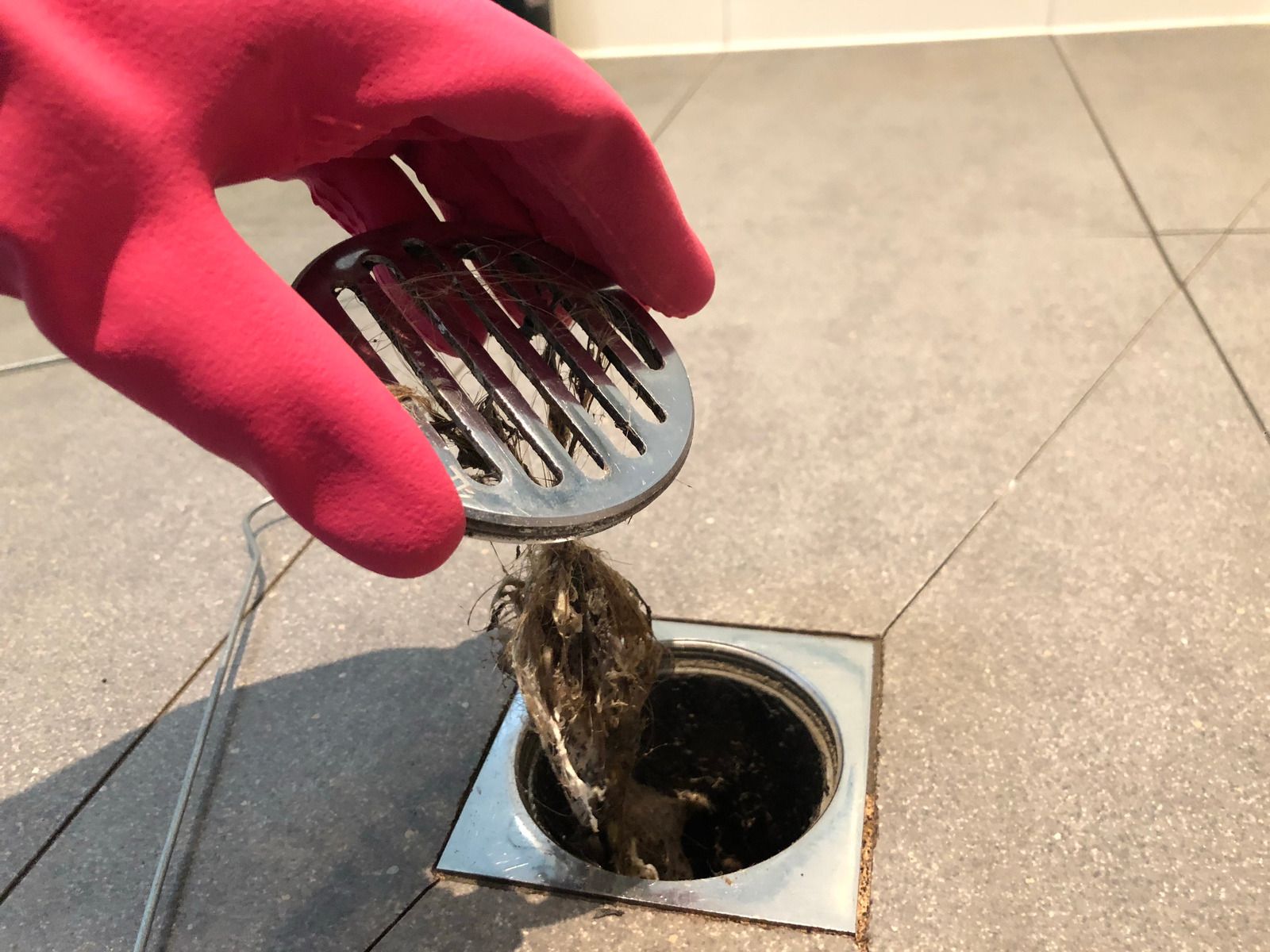
- Bathroom sinks and tubs trap hair bound together with soap film and skin oils, forming a soft mat that sits below where a hand auger usually reaches.
- Older galvanized or cast iron lines develop mineral scale on the interior surface over years of use. That scale roughens the pipe wall, which gives debris something to catch on that it wouldn't catch on in a smooth, newer pipe.
- Long-used sewer laterals collect a biofilm layer, a slick coating of organic residue and bacteria that builds up gradually and provides the same kind of surface for debris to snag on.
TIP: If the same drain has needed snaking more than once in the past several months, ask for a full interior cleaning of that line the next time a tech is out, rather than another pass with the cable. Clearing the coating off the pipe wall addresses the cause instead of just reopening the same channel through it.
When It's Not the Same Clog: Roots, Bellied Pipe, and Reverse Slope
Sometimes the recurring slowdown isn't leftover coating at all. It's a structural issue in the line that a snake temporarily works around but never resolves.
Tree Roots
Sewer laterals running under yards with mature trees, common throughout the older neighborhoods around Roseburg and out toward Winston and Sutherlin, are a magnet for root intrusion, especially at pipe joints or small cracks. A snake with a cutting head can chew through a root mass and restore flow, but the roots grow back into that same opening. Wet winters push root growth toward any moisture source underground, including a leaking or loose pipe joint, so a line that's been rooted once is a strong candidate to be rooted again unless the entry point itself gets addressed.
A Bellied Or Sagging Section Of Pipe
Over years, soil can settle unevenly under a buried line, creating a low spot, or "belly," where the pipe no longer slopes consistently toward the main line. Water and solids pool in that dip instead of moving through. A snake can clear whatever collected there, but the belly stays, and it will collect the next round of debris the same way. This kind of recurring clog tends to happen in the same general area of the line every time, rather than shifting between fixtures.
A Section With Reverse Or Insufficient Slope
Drain pipe is meant to fall consistently downhill so water carries solids along with it, keeping the flow moving fast enough that waste doesn't have a chance to settle. When a section of pipe was installed too flat, or has shifted out of level as the structure settled, water moves too slowly through that stretch. You can clean it thoroughly and it will still catch debris again within weeks, because the physics of the pipe run haven't changed.
A Blocked Vent Stack Can Mimic a Recurring Clog
One pattern that gets misdiagnosed often: multiple drains all slowing down around the same time, not just one fixture. Every drain line is paired with a vent that lets air into the system as water flows out. Without that air, water can't move efficiently through the pipe; it's the same effect as holding a finger over the top of a straw full of water. Nothing drains until the vacuum breaks.
If a vent stack on the roof gets partially blocked by leaves, a bird's nest, or debris, every drain tied to that vent line can slow down or gurgle, even though there's no actual clog sitting in the pipe. Snaking a fixture in this situation might seem to help briefly simply because the process disturbs whatever partial obstruction is there, but the slowdown returns because the real cause, restricted airflow, was never addressed.
Why Repeated Snaking Costs You More Over Time
Snaking the same drain every few weeks isn't just frustrating. It's the least efficient way to deal with a recurring problem, because each visit resolves the symptom without touching the underlying buildup, root intrusion, or slope issue causing it.
WARNING: Reaching for chemical drain cleaners between snaking visits can make the underlying problem worse, not better. These products react with the surface layer of a clog to temporarily restore flow, but they don't remove coating or scale from the pipe wall, and repeated use accelerates corrosion inside older metal pipes. That weakens the very pipe you're trying to keep clear and makes the eventual repair more involved.
A tech who keeps getting called back to the same fixture is seeing a pattern you can act on. Instead of treating each slow drain as a new, isolated event, it's worth stepping back and asking what's actually coating, narrowing, or misaligned in that specific line.
What Actually Breaks the Cycle: Wall-to-Wall Cleaning
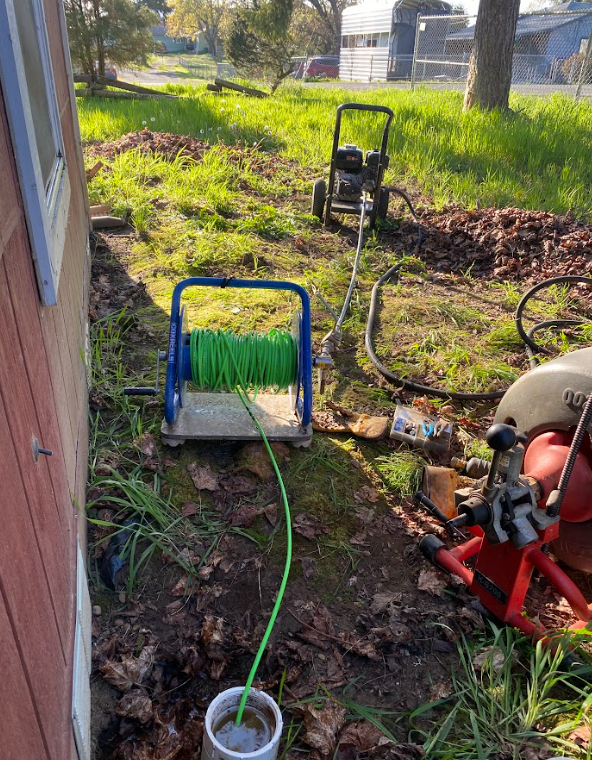
The alternative to repeated snaking is a method that cleans the full interior surface of the pipe rather than boring a channel through whatever's blocking it. High-pressure water jetting is built for exactly this. Instead of a single cutting head pushing through the center of a clog, a jetting nozzle sends water at high pressure both forward, to break up whatever's in the way, and backward along the pipe wall, scouring grease, scale, and root hair off the entire interior surface as it travels.
That's the difference between opening a channel and actually restoring the pipe's original diameter. A properly jetted line has nothing left on the walls for the next batch of hair, grease, or soap film to catch on, which is why a thorough cleaning tends to hold up far longer than snaking the same spot again.
For root intrusion or a suspected belly in the line, a camera inspection paired with cleaning tells you exactly what's happening inside the pipe: where the roots are entering, how deep the belly runs, or whether a section of line has drifted out of its proper slope. That's information a snake alone can't give you, and it's the difference between guessing at the fix and knowing exactly what the line needs.
Frequently Asked Questions
How can I tell if my clog was actually cleared or just pushed through?
If flow returns to normal for a few days to a couple of weeks and then slows again in the same spot, the original coating, root mass, or low spot is still there. A clog that was truly cleared, meaning the pipe interior was actually cleaned, tends to stay clear for a much longer stretch.
Is it normal for a bathroom sink or tub to need snaking more than once a year?
Occasional buildup happens in every home, but if the same fixture needs attention every few weeks, that's a sign the underlying coating or blockage source was never fully addressed, not just bad luck with hair and soap.
Could the problem be in the main line instead of just one fixture?
Yes. If more than one drain is sluggish at the same time, especially drains that don't share an obvious connection, the issue may sit further down the line, whether that's a vent restriction, a belly in the main run, or root intrusion closer to the point where lines join.
Does hydro jetting work on older pipes?
It depends on the pipe's condition and material. A camera inspection beforehand shows whether a line is structurally sound enough for jetting or whether a gentler approach makes more sense. That assessment matters more than the age of the house on its own.
What can I do between visits to slow down buildup?
Running hot water after using the kitchen sink, keeping grease and coffee grounds out of drains, and using a hair catcher in showers and tubs all reduce how fast new coating forms. None of that reverses buildup that's already there, but it does buy time between cleanings.
Breaking the Cycle of Recurring Drain Clogs
When the same drain slows again shortly after snaking, repeated cable work is rarely the lasting answer. Grease, soap residue, mineral scale, roots, or improper pipe slope can continue creating trouble until the underlying condition is identified. With 20 years of experience, The Go 2 Guy Waste Water Specialist understands the recurring drainage problems homeowners throughout Roseburg, Oregon face and how different pipe conditions can contribute to repeated backups and frustrating slow drainage.
A more complete approach focuses on what remains inside the line rather than simply restoring temporary water flow. Wall-to-wall cleaning can remove stubborn buildup, while camera inspection can reveal root intrusion, damaged sections, bellies, or slope problems that ordinary snaking cannot show. Understanding what is actually happening inside the pipe helps prevent repeated guesswork and unnecessary treatments, leaving homeowners with clearer information about their drainage system and a solution better suited to the cause of the recurring problem.